Who are we for?
The Institute of Neurosomatic Approaches to Trauma and Dissociation opens its online doors to psychologists, psychotherapists, and psychiatrists who work with the consequences of psychological trauma, dissociation, and complex client cases — regardless of their therapeutic modality or professional background.
We are here both for those who are just beginning their professional journey and for specialists with many years of practical experience.
Why the Institute?
In addition to offering knowledge in trauma and dissociation therapy that has no equivalent in Ukraine, we are also:
Systematic Training
International Collaboration
Modern Psychotherapeutic Approaches
Access for Ukrainian trauma therapists to modern psychotherapeutic approaches.
Professional Community
Support, exchange of experience, and professional development within a community of like-minded professionals.
Educational Outreach
Sharing modern knowledge about psychological trauma, dissociation, and approaches to understanding them.
Development of Trauma- and Dissociation-Oriented Psychotherapy in Ukraine
Developing the professional community and introducing modern approaches to working with trauma and dissociation in Ukraine.
Our goal is to complement their foundational education by equipping Ukrainian practicing professionals with modern, effective, evidence-based therapeutic approaches and tools for working with psychological trauma.
Our Approach
We invite leading international experts, authors of psychotherapeutic approaches, concepts, and theories in the field of psychological trauma and dissociation to Ukraine and organize their training online.
The therapeutic approaches that can currently be studied at our Institute are modern, evidence-based and internationally recognized psychotherapeutic approaches to trauma and dissociation therapy. They are grounded in cutting-edge neuroscience research and place the body and brain at the forefront of trauma treatment.
When we talk about trauma, we mean the response of the human organism — the body and the brain — to an event, a series of events, or chronic, prolonged stress that exceeds a person’s capacity to cope with it.
Everything that happens to a person also happens to their body, brain, and nervous system.
That is why the name includes the term “neurosomatic approaches,” as it best conveys the essence of the approaches that we are honored to offer you for study.
Educational Outreach
In addition, we engage in educational outreach aimed at expanding the understanding of the phenomenon of dissociation among Ukrainian colleagues and fostering its acceptance within the professional field.
One might say — acceptance in general.
Even today, in the 21st century, despite all the research, scientific studies, books and articles, as well as the well-known diagnostic manuals (DSM and ICD), which contain diagnostic criteria for dissociative disorders, there are still professionals not only in Ukraine but around the world who deny the existence and significance of this phenomenon.
This can lead to manifestations of dissociation remaining unnoticed or unrecognized, and their impact on a person’s psyche and the therapeutic process not being taken into account, which may affect the effectiveness of psychotherapeutic care.
The whole world interests us a little less than our native Ukraine, which is why we strive to create here a space for studying and accepting this phenomenon as part of reality, as a mechanism provided by nature to adapt to unbearable conditions for the sake of survival.
Important to Know
We are not a certification organization and do not issue state-recognized certificates. The methods that can be studied with us are not yet included in the list of methods recommended by the Ministry of Health of Ukraine, but they are internationally recognized, trusted, and supported by evidence of effectiveness.
Information about each method can be found in the corresponding sections of the website.
About Certification
Training programs in methods such as EMDR and Sensorimotor Psychotherapy are certified exclusively by the respective institutions.
Our task is to support the training of professionals, provide them with support, and contribute to their professional development in these methods.
Participants of other courses and projects receive a certificate of participation from the Institute of Neurosomatic Approaches.
A Little History
We began with the “Tree of Knowledge” Educational Projects Center founded by Karine Kocharyan, or, to be more precise, with a webinar by a living legend of trauma therapy and one of the authors of the theory of structural dissociation, Onno van der Hart.
Why him?
It is very simple — it all started with a book.
The book “The Haunted Self: Structural Dissociation and the Treatment of Chronic Traumatization” opened up a new level of understanding of psychological trauma and dissociation and their consequences for the psyche for me at that time.
The book answered so many questions, although I was left deeply puzzled as to why we still did not have this knowledge and why it had not been available earlier.
It was 2020 when I immersed myself in the search for the knowledge I lacked to understand my traumatized clients and myself.
I wrote to the author, Onno van der Hart, and he replied. We agreed on an introductory webinar, and then — everything began…
Onno van der Hart’s Theory of Structural Dissociation and the phase-oriented approach to working with trauma and dissociation.
Diagnosis and treatment of dissociative disorders with Suzette Boon.
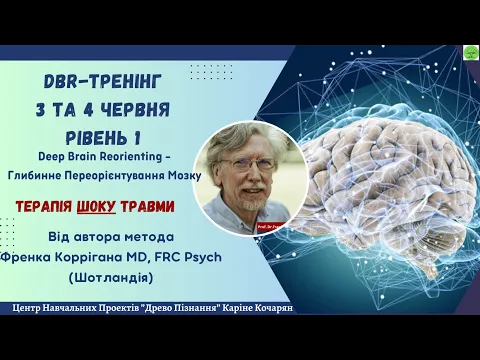
Deep Brain Reorienting by Dr. Frank Corrigan.
Sensorimotor Psychotherapy by Pat Ogden.
Ken Benau’s original concept of shame, pride, and relational trauma.
Sandra Baita’s original approach to the diagnosis and treatment of trauma and dissociation in children and adolescents.
The Institute of Neurosomatic Approaches to Trauma and Dissociation is a logical transformation and continuation of the “Tree of Knowledge” Educational Projects Center.
The change of the institution’s name does not mean a change in the people who work here or in the values that guide us.
Everything you have come to rely on over the years will only continue to improve.
The Institute of Neurosomatic Approaches to Trauma and Dissociation is a commercial name. We provide educational services on a commercial basis.
The Institute does not issue state-recognized educational documents.